


Hardwood vs. LVP Flooring in Atlanta: Which Is Right for Your Home?
It's the most common question we hear from Atlanta homeowners: should I go with real hardwood or luxury vinyl plank? Both are excellent flooring choices, but they perform differently in the Atlanta climate and suit different lifestyles. Here's an honest, side-by-side comparison to help you decide.
The Atlanta Factor: Humidity Matters
Atlanta's subtropical climate means hot, humid summers with indoor humidity levels that can swing from 30% in winter (with heating running) to 65%+ in summer. This matters because solid hardwood is a natural material that expands and contracts with moisture changes. LVP, being synthetic, doesn't react to humidity at all.
That doesn't mean hardwood is a bad choice here. Homes in Marietta and Roswell have had beautiful hardwood floors for decades. The key is proper installation with appropriate expansion gaps and maintaining consistent indoor humidity with your HVAC system. Engineered hardwood, which has a plywood core, handles humidity swings even better than solid hardwood.
Durability and Scratch Resistance
LVP wins this category for most households. Its wear layer resists scratches from pets, kids, and furniture with minimal upkeep. Drop something heavy? LVP is more likely to bounce back without a dent.
Hardwood is durable in a different way. While it scratches more easily, it can be refinished multiple times over its lifetime, essentially giving you a brand-new floor every 7 to 10 years. A solid 3/4-inch hardwood floor can last 100+ years with proper care. LVP typically lasts 15 to 25 years before it needs full replacement since it cannot be refinished.
For homes with large dogs or heavy foot traffic, LVP's scratch resistance is a practical advantage. For homeowners thinking long-term, hardwood's ability to be restored gives it the edge.
Cost Comparison
Here's where things get interesting. Installed costs in the Atlanta area typically break down like this:
- Solid hardwood (installed): $8 to $15 per square foot
- Engineered hardwood (installed): $7 to $13 per square foot
- Luxury vinyl plank (installed): $4 to $9 per square foot
LVP is the more affordable option upfront. However, factoring in hardwood's longer lifespan and refinishing potential, the lifetime cost per year can be comparable. A hardwood floor installed today could still be in your home 50 years from now with periodic refinishing. An LVP floor installed today will likely need full replacement in 15 to 20 years.
Maintenance
Both flooring types are relatively low-maintenance, but LVP is the easier of the two:
- LVP: Sweep or vacuum regularly, mop with any floor cleaner. Waterproof, so spills are a non-issue. No special products needed.
- Hardwood: Sweep or vacuum regularly, clean with hardwood-specific cleaners (no excess water). Wipe up spills promptly. Recoat every few years in high-traffic areas. Keep humidity levels between 35% and 55%.
If low maintenance is your top priority and you have kids or pets creating frequent messes, LVP makes daily life easier. If you don't mind being a bit more careful, hardwood isn't difficult to maintain.
Resale Value
Real hardwood floors consistently rank as one of the top features homebuyers look for. In Atlanta's competitive housing market, especially in desirable neighborhoods, hardwood floors can increase your home's value by 3% to 5%. Appraisers and real estate agents recognize hardwood as a premium material.
High-quality LVP is increasingly accepted by buyers, and it won't hurt your resale value. But it doesn't carry the same premium that real hardwood does. If you're planning to sell within 5 to 10 years, hardwood is the stronger investment for resale.
Installation Considerations
Both hardwood installation and LVP installation require a clean, level subfloor. Here's where they differ:
- Hardwood needs to acclimate to your home's humidity for 3 to 7 days before installation. In Georgia's climate, this step is critical and can't be rushed. Nailing or gluing to the subfloor is standard.
- LVP requires minimal acclimation (24 to 48 hours). Most LVP uses a click-lock floating installation, which is faster and can go over many existing floors.
LVP installation is typically faster, which can mean lower labor costs. Hardwood installation requires more skill and precision, especially when matching grain patterns and ensuring proper expansion gaps for Atlanta's humidity range.
Which Is Right for You?
Choose hardwood if:
- You value long-term investment and resale value
- You love the warmth and character of real wood
- You're willing to maintain consistent indoor humidity
- You plan to stay in your home long-term or are renovating to sell at a premium
Choose LVP if:
- You have active pets or young children
- You want a waterproof flooring option (great for basements, kitchens, bathrooms)
- Budget is a primary concern
- You want the look of wood with less maintenance
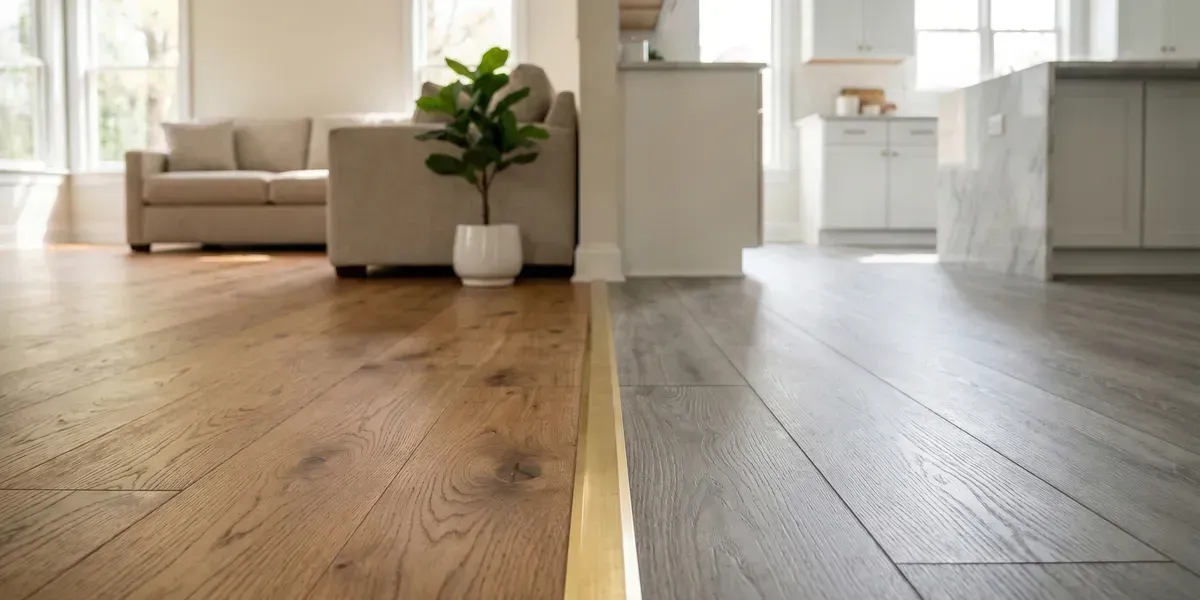
Many Atlanta homeowners actually use both: hardwood in living areas and bedrooms where warmth and character matter, and LVP in kitchens, bathrooms, and basements where water resistance is important.
See Both Options in Person
The best way to decide is to see and feel samples in your own home's lighting. We bring samples directly to you so you can compare options against your walls, cabinets, and furniture. Request a free in-home estimate and we'll walk through the pros and cons for your specific situation. For more on flooring and climate, check out our guide to the best flooring options for Atlanta's humidity.