


How to Prepare Your Home for Flooring Installation
Getting new flooring is exciting, but a little preparation goes a long way toward making installation day run smoothly. Whether you're having hardwood, luxury vinyl plank, carpet, or tile installed, this checklist will help you get your home ready and know what to expect.
1. Clear the Rooms
The most important step is removing furniture and belongings from the rooms being worked on. Your installation crew needs a completely clear workspace to do their best work efficiently.
- Move all furniture to another room, garage, or temporary storage. This includes beds, dressers, desks, sofas, and dining tables.
- Remove items from closets if closet floors are being done. Shelving can usually stay, but everything on the floor needs to be cleared.
- Take down curtains and drapes that hang close to the floor. Dust from installation can settle on fabrics.
- Remove wall decorations near the floor, especially in rooms where heavy sanding will happen. Vibrations can knock items off walls.
Plan to start moving things at least a day before installation. It always takes longer than expected, and your crew shouldn't arrive to find rooms half-cleared.
2. Handle Baseboards and Trim
Your installer may handle baseboard removal, but it's good to discuss this ahead of time:
- Some installations require baseboard removal (hardwood, LVP with click-lock). Your installer will typically remove and reinstall them.
- Label baseboards with painter's tape if you remove them yourself, noting which wall each piece came from for easier reinstallation.
- Expect some touch-up painting after baseboards go back on. Even careful removal can chip paint.
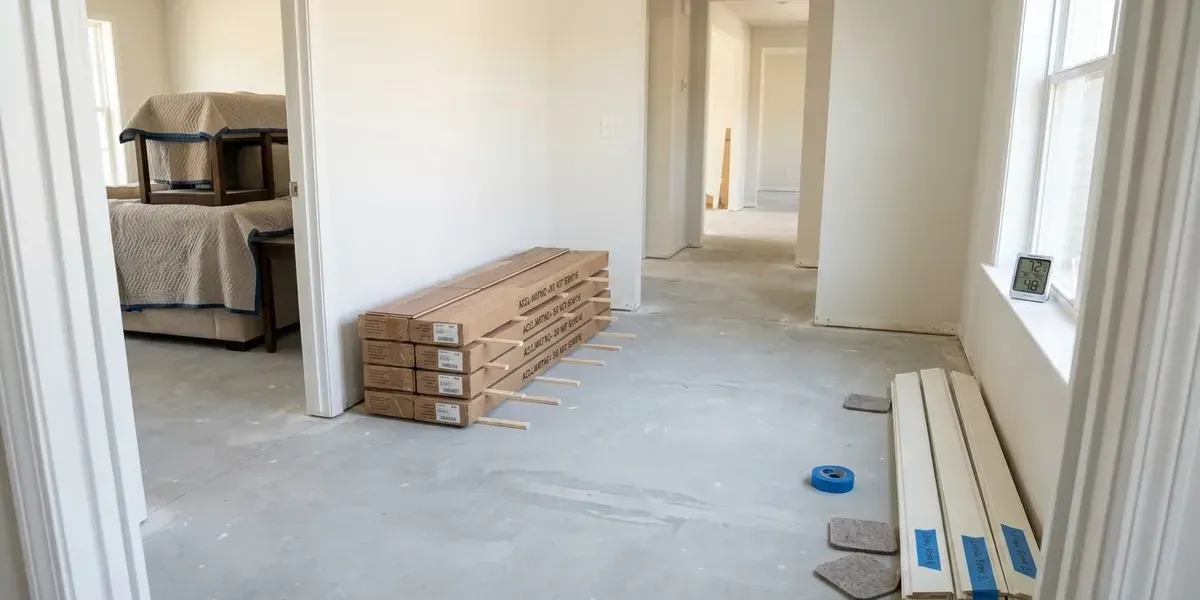
3. Acclimate Your Flooring (Hardwood Only)
If you're installing solid or engineered hardwood in Georgia, acclimation is critical. Wood needs to adjust to your home's temperature and humidity before installation.
- Hardwood should acclimate for 3 to 7 days inside your home, stacked with spacers between rows for airflow.
- Keep your HVAC running at normal settings during acclimation. The goal is for the wood to reach equilibrium with your home's environment.
- Don't store wood in the garage. Garages in Atlanta can reach extreme temperatures and humidity levels that differ from your living space.
Skipping acclimation is one of the most common causes of gaps, buckling, and cupping in hardwood floors. Atlanta's humidity swings between seasons make this step especially important. A reputable installer will always build acclimation time into the project schedule.
4. Plan for Pets and Children
Installation involves loud equipment, dust, and open doorways. For safety and everyone's comfort:
- Keep pets in a separate area or arrange for them to stay elsewhere during installation. Dogs especially can be stressed by the noise and unfamiliar people.
- Small children should stay clear of work areas. Saws, adhesives, and exposed nails are genuine safety hazards.
- Close doors to work areas to contain dust and keep pets and kids separated from the crew.
5. Adjust Your HVAC
Temperature and humidity control matter for flooring installation, especially in the Atlanta area:
- Keep your home between 65 and 75 degrees during and after installation.
- Maintain humidity between 35% and 55%. This is a good range for most flooring types and comfortable living year-round.
- If installing in summer, make sure your AC is working well. Georgia's summer humidity can cause adhesive issues and wood expansion if the indoor environment isn't controlled.
- If installing in winter, run a humidifier if your heating system dries the air below 35% humidity.
6. Prepare the Subfloor
Your installer handles subfloor preparation, but knowing what to expect helps:
- Old flooring removal may be needed. Carpet, old vinyl, or damaged flooring usually needs to come out. Discuss this during your estimate so it's included in the quote.
- Subfloor leveling is sometimes necessary. Uneven subfloors cause problems with every type of flooring. Your installer will check for high and low spots.
- Moisture testing should be done on concrete subfloors. Excess moisture from a concrete slab can damage hardwood and cause adhesive failure.
7. Know What to Expect on Installation Day
Here's what a typical installation day looks like:
- Crew arrival: Usually 8 to 9 AM. They'll do a final walkthrough and confirm the plan with you.
- Noise: Expect sawing, nailing, and hammering. It's loud. Plan to be in a different part of the house or out entirely.
- Dust: Even with dust containment, some fine particles will travel. Cover electronics and sensitive items in adjacent rooms.
- Duration: A typical room takes 1 to 2 days. Whole-house installations can take 3 to 5 days depending on the flooring type and complexity.
- Walk-through: At the end of each day, your installer should walk you through what was completed and what's next.
8. After Installation
- Wait before moving furniture back. Hardwood with oil-based finish needs 24 to 48 hours of cure time. LVP and carpet can usually handle furniture the same day.
- Use felt pads under all furniture legs to prevent scratching your new floors.
- Avoid wet mopping hardwood for the first week to let the finish fully cure.
- Keep the HVAC running at consistent settings, especially for hardwood, to avoid rapid humidity changes as the floor settles.
Get Started with a Free Estimate
The best preparation starts with a good plan. Whether you're considering hardwood, LVP, carpet, or tile, we'll walk through everything during your free in-home estimate so there are no surprises. We serve homeowners throughout the Atlanta metro, including Sandy Springs and Alpharetta. For help choosing the right flooring type, see our comparison of hardwood vs. LVP for Atlanta homes.